
Digital Watermarks or QR Codes on Steroids: The Future of the Recycling Supply Chain
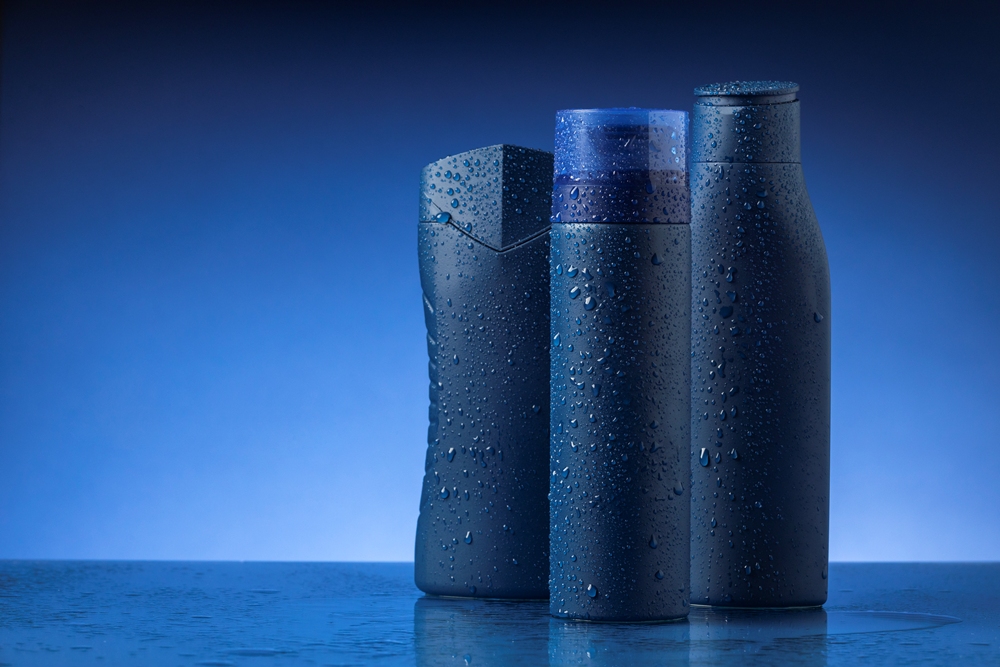
What if every bottle could tell its own story?
It is designed, molded, filled, shipped, purchased, used, and eventually discarded. For most packaging today, that is where the story becomes unclear — once it leaves the consumer's hands, a bottle's identity is often lost among thousands of others moving through bins, trucks, sorting lines, and grinders.
Recycling Is Also an Information Challenge
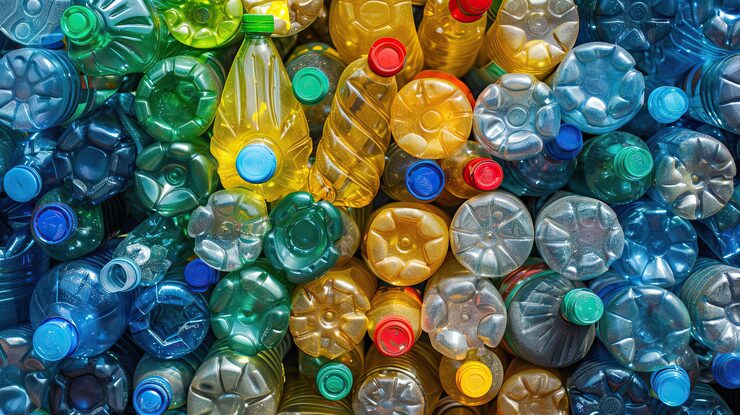
When people think about recycling, they usually think about material. But recycling is not only a material challenge — it is also an information challenge.
A recycling facility is often asked to make fast decisions with incomplete information. If the system gets it right, valuable plastic can become useful recycled material again. If it gets it wrong, material can be downgraded, contaminated, rejected, or lost.
What if the bottle itself could help the recycling system make better decisions?
A Bottle With a Built-In Digital Identity
In the future, a bottle may not rely only on a resin code or label. Instead, its surface could carry a digital pattern through engineered texture — built into the mold, repeated across the bottle, and readable by advanced cameras or sorting equipment.
Not This
Identity that lives on top of the bottle, separate from the plastic itself.
- A visible square QR code
- A label that can peel off
- A barcode that must stay in one perfect location
Instead: Part of the Bottle
To a consumer it looks like a grip pattern or subtle surface finish. To a recycling system, it acts like a digital code.
- A texture molded into the plastic itself
- Still visible on part of the surface if crushed
- Carried even by smaller shredded pieces
The data is not just attached to the package. It is carried by the package.
Smarter Recycling Supply Chains
Instead of only asking “What plastic is this?” a bottle with a readable texture could help sorting equipment ask deeper questions:
- Is this bottle PET or HDPE?
- Was it designed for food-contact use?
- Does it contain PCR?
- Is it suitable for bottle-to-bottle recycling?
- Does it belong in a high-value stream?
- Should it be separated from other packaging?
Cleaner Streams
Higher-Quality Resin
More PCR Use
Less Virgin Plastic
Less Material Lost
A Global Digital Identity for Every Bottle
What if the textured code is also connected to a global digital record? Each bottle could carry a lifecycle identity, with every supply chain participant updating the record as it moves from one stage to the next.
Bottle Manufacturer
Creates the original record.
- Resin type & PCR percentage
- Bottle weight & color
- Mold / cavity & production date
- Food-contact classification
Filler / Brand Owner
Adds the next chapter.
- Product filled & batch
- Fill date & plant location
- Shelf-life information
- Case or pallet details
Distributor
Records movement history.
- Warehouse entry & exit
- Distribution route & region
- Time spent in storage
Retailer
Adds shelf-life information.
- Date received & time on shelf
- Date sold
- Regional sales movement
Collection & Recycling
Records the most important sustainability chapter.
- Where collected & which facility sorted it
- Accepted, rejected, flake, or pellet
- Whether it returned as PCR
No Longer Just a Container
At that point, the bottle becomes a connected data point in the circular economy.
From “Recyclable” to “Actually Recycled”
Today, many packaging sustainability claims stop at design intent. Those statements are important, but they don't always prove what happened after consumer use.
The Claim
“This bottle is recyclable.” “This bottle contains PCR.” “This package supports circularity.”
- Can be recyclable and still not be recycled
- Can be collected and still be rejected
- Can be designed for circularity and still disappear from the loop
The Proof
“This bottle entered the recycling stream.” “This percentage of our bottles was recovered.”
- Sorted into a high-quality stream
- Became recycled flake or pellet
- PCR returned into new packaging
It moves sustainability reporting from estimation toward validation.
Why This Matters — Beyond Recycling Operations
Why Brand Owners Would Care
A global digital identity system could help answer questions that are difficult to answer today — and support:
- Sustainability reporting & PCR claims
- EPR compliance & customer transparency
- Packaging design improvements
- Brand trust & supply chain accountability
- Closed-loop recycling goals
Why Bottle Manufacturers Should Care
A bottle may no longer be judged only by weight, strength, appearance, cost, and shelf performance. A future-ready bottle may also need to be:
- Lightweight, recyclable & PCR-compatible
- Customer-approved & production-efficient
- Machine-readable
For manufacturers like Arch, this moves the conversation from “We make your bottle” to “We help design packaging that can support the future recycling supply chain.”
A Bottle's Future Journey
And through that journey, the data record grows. The bottle is not silent anymore.
Made
Molded with a textured identity
Filled & Shipped
Travels through the supply chain
Used
Purchased and consumed
Collected & Read
A camera reads the texture at the facility
Sorted
Sent into the correct recycling stream
Reborn as PCR
Flake, pellet, then a new bottle
The Reality: This Is Still a Concept
This future does not fully exist today. For it to work, many parts of the system would need to come together — sharing a common language, common data standards, compatible scanning systems, and a trusted way to update and protect lifecycle information.
So this is not a claim that the system is already here. It is a concept for where packaging and recycling could go next.
The Package Becomes the Proof
For years, the packaging industry has focused on making bottles lighter, stronger, more recyclable, and more compatible with PCR. The next step may be making bottles smarter.
- Proof that it was designed responsibly
- Proof that it entered the recycling stream
- Proof that it was sorted correctly
- Proof that it became recycled material
- Proof that it helped close the loop
The Future Bottle May Have a Memory
Every bottle has a journey. Today, most of that journey disappears after use. But in the future, a bottle could carry a memory — not in words, not in a label, and not in a visible code, but through a digital texture built into the plastic itself.
Not just smart packaging. Smart recycling. Smart tracking. Smart proof.
A bottle that does not just hold a product — a bottle that tells its story.
Looking for Bottle Packaging Designed for the Future of Recycling?
Explore how recyclable design, PCR materials, lightweighting, smart bottle texturing, and circular packaging strategies can support your sustainability goals.