
Green Choices in Manufacturing: From Flight-Level Decisions to Factory Floors
Sustainable manufacturing is not one decision. It is a chain of smarter choices.
Sustainability begins long before a product reaches the production line — in how materials are sourced, how shipments are planned, how facilities are powered, how products are designed, and how waste is handled after use. From high-level logistics decisions to day-to-day process improvements on the factory floor, every choice can reduce environmental impact, improve efficiency, and support a more responsible supply chain.

Strategic Choices: Sustainability Starts Before Production
Before a bottle, package, or product is manufactured, companies already make decisions that affect its carbon footprint. A sustainable operation does not only ask “How do we make this product?” It also asks, “How do we move materials and finished goods more responsibly?”
- Choosing lower-emission transportation options
- Consolidating shipments to reduce partial loads
- Optimizing delivery routes
- Using direct routes where practical
- Evaluating rail, ocean, or ground transport
- Working with suppliers closer to production
- Offsetting emissions where reductions aren't yet possible

Green Product Lifecycle Management
Once production begins, sustainability must be built into every stage of the product lifecycle: design, material selection, manufacturing, distribution, use, recovery, and end-of-life management. Green Product Lifecycle Management (Green PLM) uses digital systems and operational discipline to improve efficiency and reduce waste — connecting equipment, collecting data, collaborating across teams, correcting process issues, and controlling performance.
For bottle manufacturing and packaging, Green PLM can include the following:
Design for Recyclability
Packaging should be designed so it can be collected, sorted, recycled, and reused in future applications whenever possible.
- Using recyclable resin families where practical
- Avoiding unnecessary material combinations
- Designing labels, closures and colorants with recycling in mind
- Lightweighting without compromising performance
Material Selection
Sustainable material choices support performance goals without relying solely on virgin resin.
- Post-consumer recycled HDPE and PET
- Ocean-bound recycled content where suitable
- Bio-based materials meeting performance and regulatory needs
- Reuse of internal scrap where quality standards allow
Process Optimization
Manufacturing efficiency has a direct environmental impact. Reducing cycle time, scrap, air leaks, and downtime lowers both cost and emissions.
- Optimizing compressed air systems and chiller efficiency
- Reducing resin drying energy
- Preventive and predictive maintenance
- Reducing startup scrap and changeover waste
End-of-Life Planning
Sustainability does not end when the product leaves the factory. Circular economy thinking focuses on reducing material use, designing products to be less resource-intensive, and recovering material that would otherwise become waste.

Energy Efficiency: The Fastest Path to Lower Emissions
For manufacturers, energy is often one of the largest contributors to operational emissions. Improving energy efficiency can reduce environmental impact while also lowering operating costs.
- Installing solar energy systems
- High-efficiency motors, chillers, compressors, dryers
- Improving power factor
- Reducing compressed air leaks
- Automating equipment shutdown during idle time
- Real-time energy monitoring by line or department
- Battery storage for demand charges or peak loads
Real-Time Visibility Drives Real Efficiency
Digital tools help manufacturers monitor equipment, track energy use, identify waste, and improve production reliability. Deloitte notes that IoT-enabled predictive maintenance gives companies deeper real-time insight into operations, helping improve efficiency and reduce costs.
Resource Conservation
A sustainable factory is not only powered more efficiently — it also uses fewer resources to produce the same or better output. In packaging manufacturing, this means looking beyond the bottle itself: resin, corrugate, pallets, stretch wrap, colorants, labels, utilities, transportation, and disposal all contribute to the overall sustainability footprint.
- Reducing resin waste
- Reusing process scrap
- Improving water management
- Reducing packaging waste
- Extending tool and equipment life
- Improving warehouse storage and handling
Sustainable Materials Management
The U.S. EPA describes Sustainable Materials Management as a lifecycle approach to using and reusing materials more productively throughout their full life cycle.

Sustainable Factories Are Already Here
Sustainable manufacturing is not just a future concept. Leading manufacturers are already proving that cleaner operations and strong productivity can work together.
IKEA's Żbąszynek Plant
Cited as one of the world's largest furniture plants powered entirely by renewable energy — wind, biomass, and solar. Efficiency improvements such as insulation and lighting upgrades have also supported plant performance.
Ferrari's Maranello E-Building
Includes more than 3,000 solar panels, rainwater recovery, green spaces, and energy-efficient systems designed to support lower-carbon production.
These examples show that sustainability is not limited to one industry. Whether producing furniture, vehicles, bottles, or packaging, the same principles apply:
- Use cleaner energy
- Reduce waste
- Improve efficiency
- Extend material value
- Use data to make better decisions
- Design with the full lifecycle in mind
Digital Transformation: The Bridge Between Sustainability and Performance
Manufacturers cannot improve what they cannot measure. Digital transformation helps turn sustainability goals into daily operating decisions — tracking machine performance, energy use, scrap, downtime, preventive maintenance, quality trends, and material consumption.
Smart manufacturing tools are especially powerful because they connect sustainability with productivity. A more efficient line is often a greener line. A better-maintained machine usually wastes less energy and material. A better-planned schedule reduces changeovers, overtime, and unnecessary movement.
- Predict equipment failures before breakdowns
- Reduce unplanned downtime
- Identify high-scrap processes
- Improve scheduling efficiency
- Track carbon impact by product or line
- Optimize maintenance intervals

What Green Choices Mean for Bottle Manufacturing and Packaging
For bottle manufacturers, sustainability must be practical, measurable, and technically sound — supported by material data, process controls, quality standards, and lifecycle thinking, not broad claims.
Use Recycled Content Where It Works
PCR HDPE and PCR PET can reduce reliance on virgin resin, but must be validated for performance, appearance, processing stability, regulatory requirements, and customer expectations.
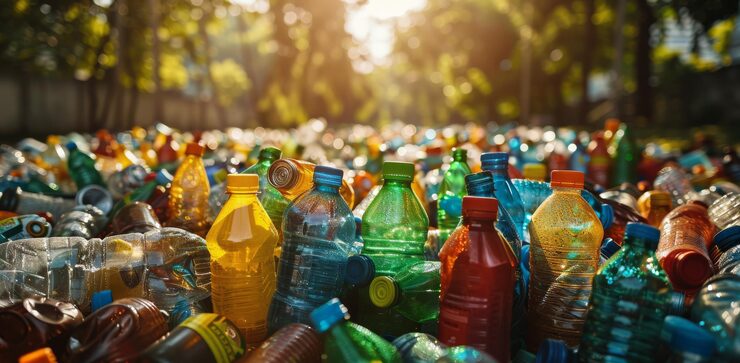
Design for Recycling
A recyclable bottle isn't just about the base resin — color, label material, adhesives, closure systems, decorations, and sorting compatibility all matter.
Reduce Bottle Weight Responsibly
Lightweighting can reduce resin consumption and transportation impact, but must not compromise strength, shelf life, fill-line performance, or customer use.
Improve Production Efficiency
Lower scrap, stable cycles, optimized drying, efficient cooling, and reduced compressed air losses all contribute to a lower-impact product.
Use Renewable Energy
Solar power, energy-efficient equipment, power factor correction, and energy monitoring can significantly reduce Scope 2 emissions.
Support Circular Systems
Bottle-to-bottle recycling, reusable packaging, improved material sorting, and customer take-back programs keep valuable materials in use longer.
Avoiding Greenwashing: Sustainability Must Be Specific
Customers, regulators, and consumers are becoming more cautious about environmental claims. General statements like “eco-friendly,” “green,” or “sustainable” are no longer enough. For biodegradable or compostable claims especially, companies must back statements with recognized testing methods, defined disposal conditions, and realistic end-of-life explanations.
Support Claims With Facts
- Recycled content percentage
- Resin type and source
- Carbon reduction estimates
- Energy reduction data
- Testing standards used
- Recyclability guidance
- Certifications or third-party documentation
- Scope 1, 2, and 3 emissions tracking
- Actual process improvements
Sustainability Is a Series of Better Decisions
Sustainable manufacturing does not happen through one project or one material change. It happens through hundreds of better decisions made across the business:
- A direct shipment instead of an inefficient route
- A lighter bottle that still performs
- A machine that uses less compressed air
- A solar panel producing clean power
- A recycled resin replacing virgin material
- A digital dashboard catching waste before it grows
- A package designed for the next life, not just the first one
Looking for Sustainable Bottle Manufacturing?
The future of manufacturing belongs to companies that combine performance, cost control, quality, and sustainability into one operating system. Explore how recycled content, renewable energy, lightweight design, and circular packaging strategies can support your sustainability goals.
Read More Blogs